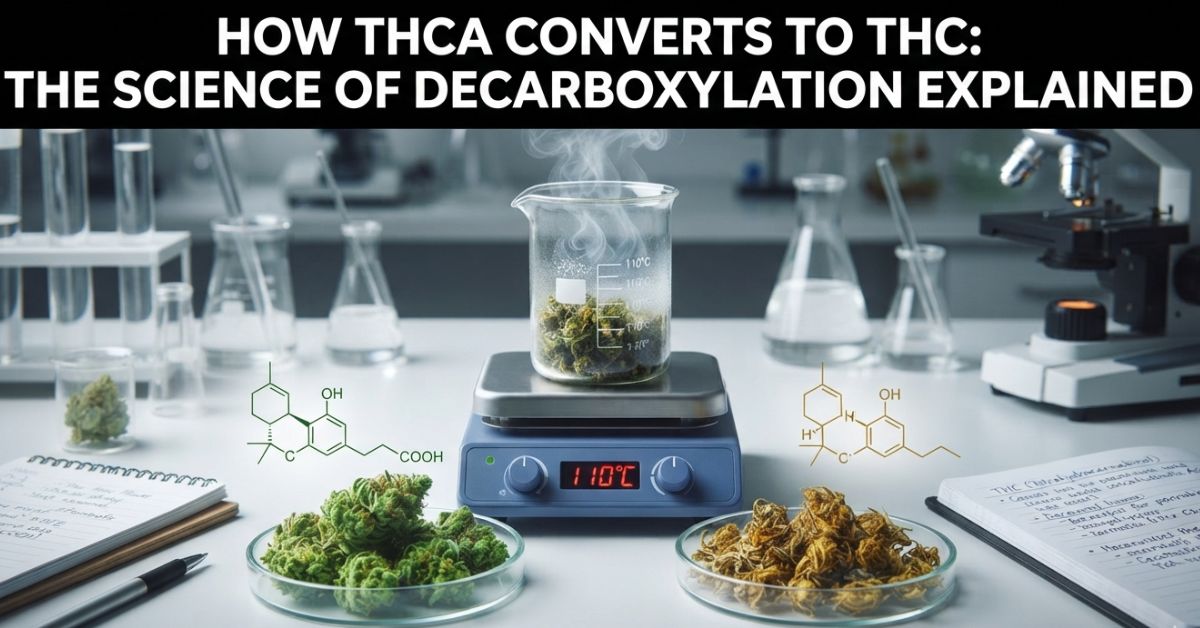
Raw hemp flower, sitting untouched in a jar, isn’t going to get you high. Not because it’s weak, and not because something’s wrong with it. It’s because of chemistry, plain and simple. THCA to THC decarboxylation is the process that flips a non-intoxicating compound into the one everyone actually associates with cannabis, and it happens the moment heat enters the picture.
Understanding this isn’t just trivia. It changes how you store flower, how you smoke it, and what you should actually expect from a jar labeled with a big THCA percentage on the front.
What Is Decarboxylation?
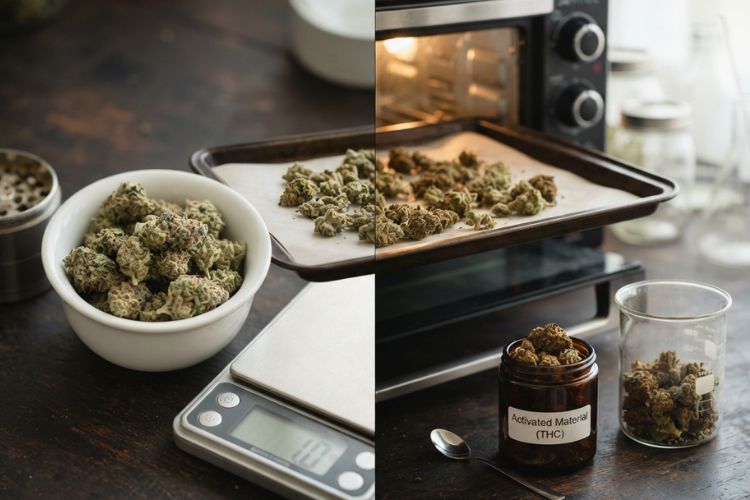
At its core, decarboxylation is a chemical reaction where a molecule loses a carboxyl group, usually released as carbon dioxide, in response to heat. In cannabis specifically, that means THCA sheds an extra carbon-based piece of its structure to become THC.
Before that happens, THCA sits in the plant in its raw, acidic form. It’s biologically active in its own way, but it doesn’t interact with your body’s cannabinoid receptors the same way THC does. What is decarboxylation, in the simplest terms possible? It’s the difference between raw plant material and something your body can actually feel.
How Does THCA Turn Into THC?
The short answer: heat forces a structural change. THCA has an extra carboxyl group attached to its molecular structure that THC doesn’t have. Apply enough heat for long enough, and that group breaks off, releasing CO2 and leaving behind THC in its place.
This isn’t some slow, mysterious transformation either. It happens fast once the temperature threshold is crossed, which is exactly why lighting a joint or hitting a vape converts THCA into THC almost instantly, well before you take that first pull into your lungs.
THCA to THC Decarboxylation: The Chemistry Behind It
Chemically, this comes down to molecular weight and structure. THCA carries a slightly heavier molecular structure than THC because of that extra carboxyl group. Heat energy is what breaks the bond holding it in place, and once it’s gone, what’s left behind is lighter, more volatile, and able to bind with cannabinoid receptors in a way the acidic form simply can’t.
This is why smoking or vaping triggers effects almost immediately, while eating raw flower does close to nothing. Without heat, that structural shift never happens, and THCA just passes through the body largely unconverted.
How Long Does Decarboxylation Take?
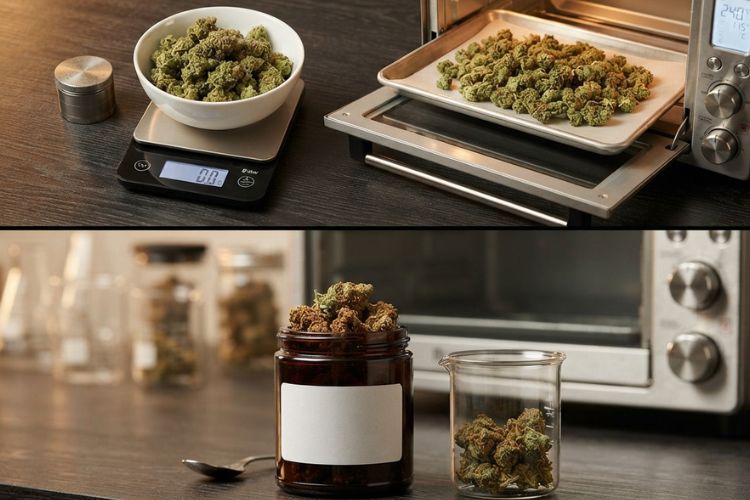
For smoking or vaporization, this process occurs in mere seconds since temperatures generated through flame or heating devices exceed the necessary thresholds for activation of the reaction. In cases of cooking or edible making, however, the process takes longer – around 30- 45 minutes at lower but uniform temperatures ranging from 220°F to 245°F.
Heat, Time, and Temperature: What Actually Triggers the Conversion
Decarboxylation does not operate the same way in all circumstances. Rather, it is a process that relies on both heat levels and the duration of temperature application. An equal contribution from a high temperature for a limited time period and a lower temperature for more time yields similar results.
This is also why flower left sitting in bright, warm conditions for months slowly loses potency over time. Light and ambient heat trigger a small amount of gradual decarboxylation even without an open flame, which is part of why proper storage matters more than people realize.
Why This Matters When You Shop for Flower
When you understand the concept of decarboxylation, it helps you use it while shopping. For example, if you look into the jar of THCA, you might be excited because the percentage is very high. However, looking at this figure only describes the quantity of raw compound in the jar. If you intend to buy THCA flower online, make sure to check the COA that states the total quantity of THC.
Smoking, Vaping, and Edibles: Different Paths to Decarboxylation
Every consumption method decarboxylates THCA differently:
- Smoking. Instant conversion from direct flame contact, though a portion of cannabinoids is lost to combustion.
- Vaping. Similar instant conversion, but at controlled, lower temperatures, which tends to preserve more of the compound and flavor.
- Baking or cooking. Requires a dedicated low-and-slow decarb step before the flower goes into any recipe, or the final product ends up far weaker than expected.
- Raw consumption. Little to no conversion happens, meaning close to no psychoactive effect at all.
Whichever method you land on, the underlying chemistry stays the same. Heat is always the trigger.
Final Take: THCA to THC Decarboxylation in Practice
Once you understand how does THCA turns into THC, jar percentages and lab reports start making a lot more sense. THCA to THC decarboxylation isn’t some brand marketing term; it’s a real chemical reaction that determines whether flower does anything at all once it’s consumed.
So, what is decarboxylation summarized in one sentence? It means that decarboxylation is what changes the inactive substance found in the plant material into an active one. All the jars of THCA flower at Kingstone Pharms are tested for both THCA and total THC, so customers are fully informed about any product they are going to use in their experience.
FAQs
Does grinding flower start the decarboxylation process?
No. While grinding does break the plant matter up, it doesn’t provide the necessary heat to cause any chemical reactions to occur. Decarboxylation happens only when heat is applied.
Can THCA flower decarboxylate just from sitting in sunlight?
Only a little, bit by bit and very slowly over time. Exposure to sunlight and warm storage will lead to conversion, which is why one should store the flower in a cool, dark, and airtight container.
Is decarboxylated flower stronger than raw flower?
Not stronger, but more effective. Raw THCA will not have the same effects unless it has undergone the decarboxylation process, meaning that decarboxylated flower is the one that is used to produce the effects sought by the customer.
Do all cannabinoids decarboxylate at the same temperature?
No. Different cannabinoids need slightly different temperatures to decarboxylate, which is a reason why temperature control is more relevant in cooking than with smoking or vaping.