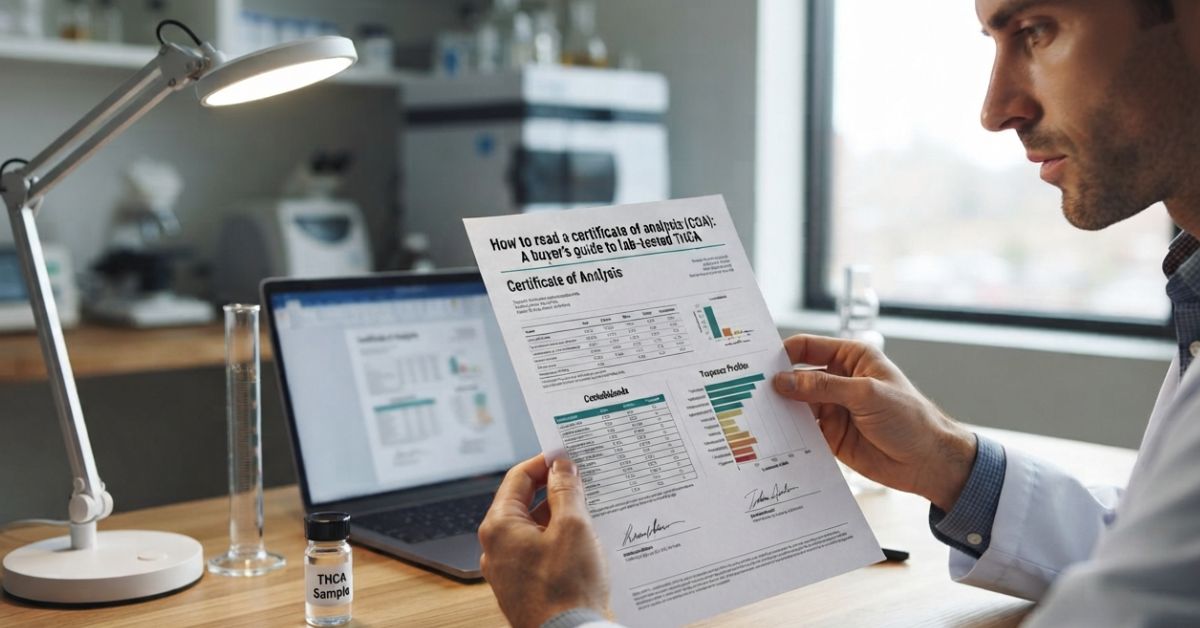
Here’s the thing nobody tells you when you start shopping for hemp online: the label on the jar means almost nothing. What actually matters is the paperwork behind it. A THCA certificate of analysis is the one document that tells you, in plain numbers, whether what you’re buying is what it claims to be, and most people never bother opening it.
That’s a mistake. Once you know what you’re looking at, a COA takes about thirty seconds to check, and it can save you from wasting money on flower that’s been cut, mislabeled, or worse.
What Does a COA Actually Show?
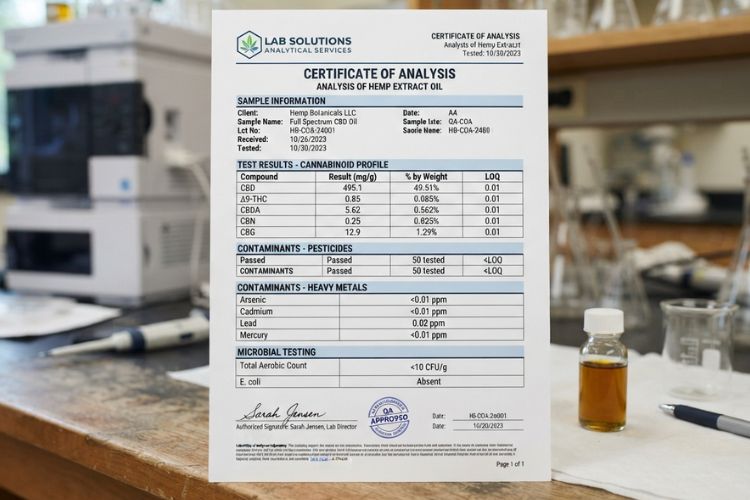
A COA is a lab report. Full stop. It’s generated by a third-party facility that has nothing to do with the brand selling the product, which is exactly the point, an independent lab has no reason to fudge the numbers in a seller’s favor. The report lists cannabinoid content, tests for contaminants, and usually includes a batch or lot number tying it back to the exact product you’re holding.
Think of it like a nutrition label, except instead of calories and sodium, you’re looking at THCA percentage, pesticide screens, and heavy metal counts.
Why a THCA Certificate of Analysis Matters More Than the Label
Packaging can say whatever a brand wants it to say. Nobody’s checking that before it ships. A THCA certificate of analysis, on the other hand, comes from a lab with accreditation on the line, which means the numbers are a lot harder to fake convincingly.
This matters even more with hemp-derived THCA specifically, since the legal difference between compliant and non-compliant product often comes down to a single decimal point. Skip the COA, and you’re trusting a label. Check it, and you’re trusting a lab.
How to Read a COA: The Cannabinoid Panel
This is the section most people actually care about, and it’s usually the easiest to find. Here’s what you’re looking for:
- THCA percentage. This is the raw, unconverted cannabinoid before it’s smoked or heated. It’s usually the highest number on the sheet.
- Delta-9 THC (dry weight). Federal compliance hinges on this number staying under 0.3%. If it’s higher, the product technically isn’t legal hemp anymore.
- Total THC. This accounts for THCA converting to Delta-9 when heated, and gives you a realistic picture of potency.
- Minor cannabinoids. CBD, CBG, CBN, and others sometimes show up here in smaller amounts.
Once you get the hang of how to read a COA, spotting a strong batch versus a weak one takes seconds, not minutes.
Checking the Certificate of Analysis for Safety Screens
Potency is only half the story. The other half is what’s not supposed to be there. A full certificate of analysis tests for pesticides, residual solvents, heavy metals, and microbial contaminants like mold or bacteria. Every one of these panels should show a “pass” result; anything flagged “fail” means the product shouldn’t be on shelves at all, regardless of how good the potency numbers look.
If a seller can’t produce this section, or only shows you the cannabinoid panel and nothing else, that’s worth pausing on. A real COA covers all of it, not just the flattering parts.
Matching the Report to the Batch
Each authentic COA corresponds to a specific batch number. In most cases, this number can also be found on the package label. Verify that the corresponding batch number on the report is the same as that on the jar or bag in front of you. Sometimes, sellers use a single out-of-date COA for all products in their line. While this is legal, it does not provide accurate information about the product in front of you.
This is the reason why understanding how to read a COA means more than just looking for the THCA number. You need to match the batch number, check the date of the document, and make sure that the laboratory is accredited.
What Makes Lab-Tested THCA Flower Worth the Extra Step
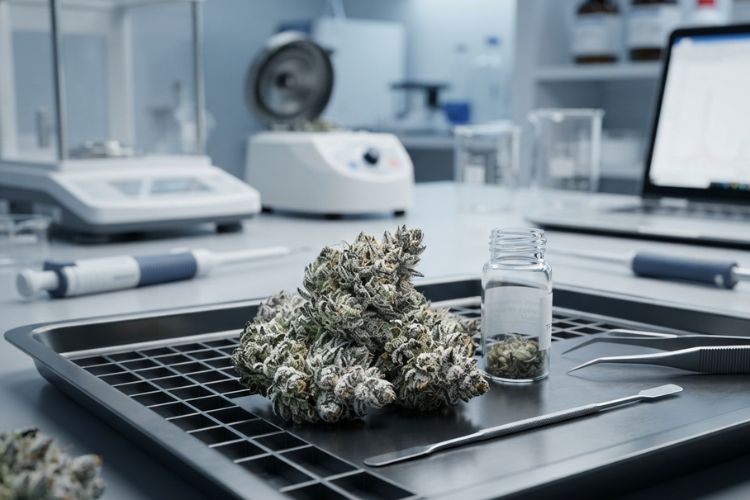
Buying lab-tested THCA flower isn’t about being paranoid. It’s about not gambling on something you’re going to smoke. A batch that’s never been screened could be carrying pesticide residue, mold spores, or a THC percentage that pushes it outside legal limits, and you’d have no way of knowing until it’s too late to matter.
Reputable sellers of third-party tested hemp products make this easy by publishing COAs directly on product pages, no digging required. If a seller won’t show you the report or hides behind vague “lab tested” language without an actual document to back it up, that’s a red flag worth taking seriously.
A Quick Checklist Before You Buy
Next time you’re comparing options, run through this fast:
- Is there an actual COA linked or attached, not just a claim of testing?
- Does the batch number on the report match the batch on the packaging?
- Is Delta-9 THC under 0.3% on a dry weight basis?
- Did every contaminant panel come back as “pass”?
- Is the testing lab named, dated, and accredited?
Five checks, thirty seconds, and you’ll know exactly what you’re getting before you spend a dollar on lab-tested THCA flower.
Kingstone Pharms publishes a current COA for every product we carry, so you’re never left guessing. Farm Bill-compliant, third-party tested, and shipped discreetly- that’s the standard we hold every batch to.
FAQs
What’s the difference between THCA and Delta-9 THC on a COA?
THCA is the natural form of the compound found in the plant until heat converts it into the chemical known as Delta-9 THC, which produces effects found in cannabis. A Certificate of Analysis should have both figures indicating the potency before and after the process has taken place.
Do all hemp sellers provide a COA?
They should be doing so, but many fail to do so. Sellers with good practices will provide a Certificate of Analysis for every batch they produce. If the supplier is not able to supply it when requested, it is a clear indication the customer should buy elsewhere.
How often should a COA be updated?
Every new batch needs its own report. A COA from six months ago doesn’t tell you anything reliable about what’s in a bag you’re buying today.
Can a product fail a COA and still get sold?
It shouldn’t. Any batch that fails a contaminant screen is supposed to be pulled, not relabeled or quietly shipped anyway. That’s exactly why checking the report yourself matters.